
Slowing Water to Better Conserve It
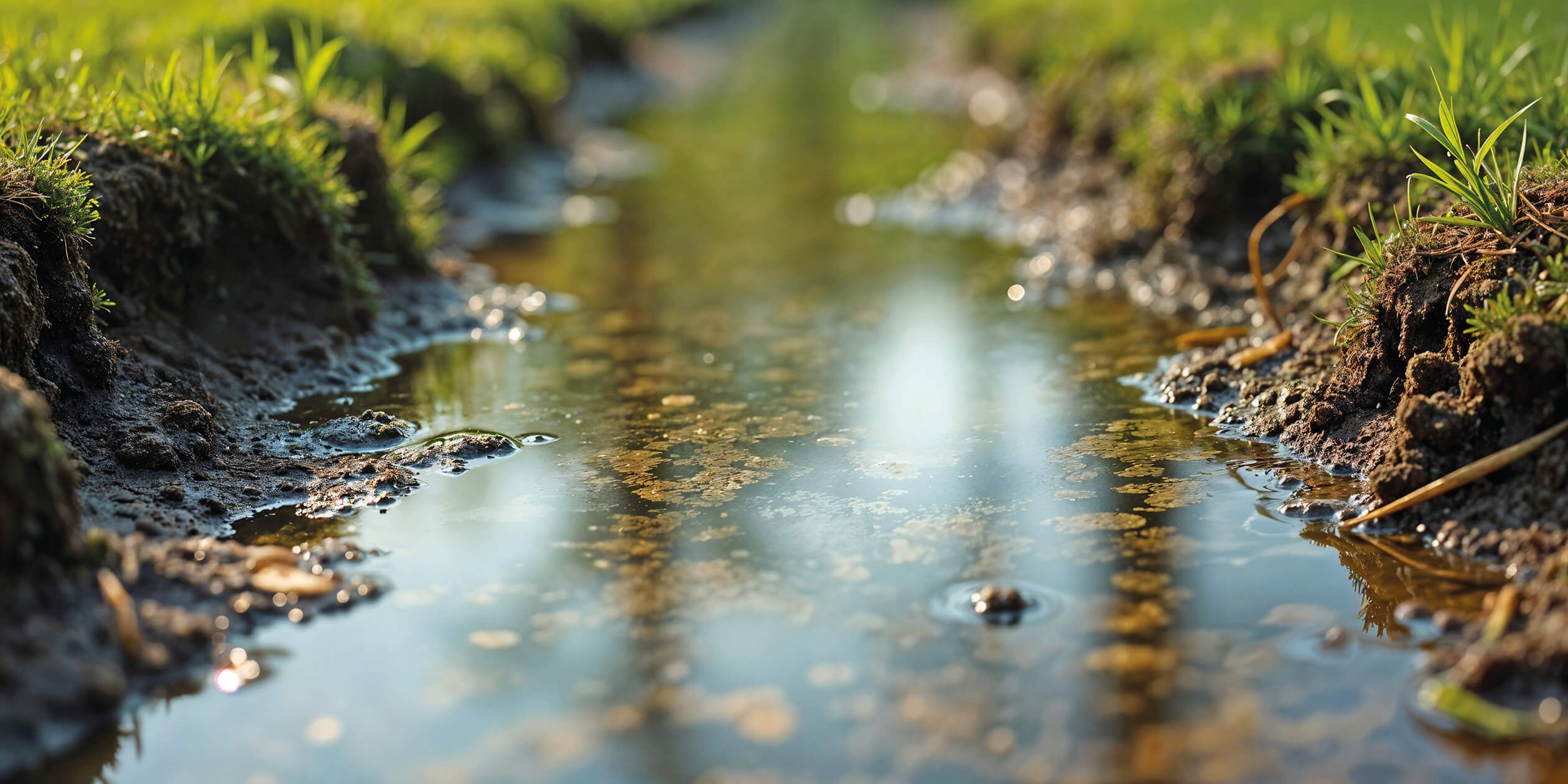
Contrary to what many might think, the water contained in a water table or an aquifer is not a kind of underground lake buried beneath a layer of soil. Instead, it is a network of pores and fractures in the soil or in rocks, filled with fresh water. The recharge potential of a water table or an aquifer, meaning their ability to absorb and retain water, depends on various factors, including the intensity and duration of rainfall. Heavy and rapid rainfall, which quickly runs off the land, stays on the surface and does not easily penetrate the soil, while accumulating in lower-lying areas, where it can cause localized flooding.
Key Principles of Regenerative Hydrology
Far from being obscure or overly complex, regenerative hydrology is an approach that aims to restore natural water cycles. Agricultural land management and human interventions, such as deforestation or land levelling, often alter the territory and the way water behaves during rainfall. This approach therefore encourages rethinking how land is managed to restore a slower, more natural water cycle, promoting gradual infiltration into the soil.
Slowing, spreading, sinking, and promoting evapotranspiration are its key principles. With thoughtful practices and well-designed land management, it becomes possible to better distribute water across the landscape, improve infiltration, and reduce damage from intense rainfall, all while strengthening the water resilience of agricultural fields. A path well worth exploring!