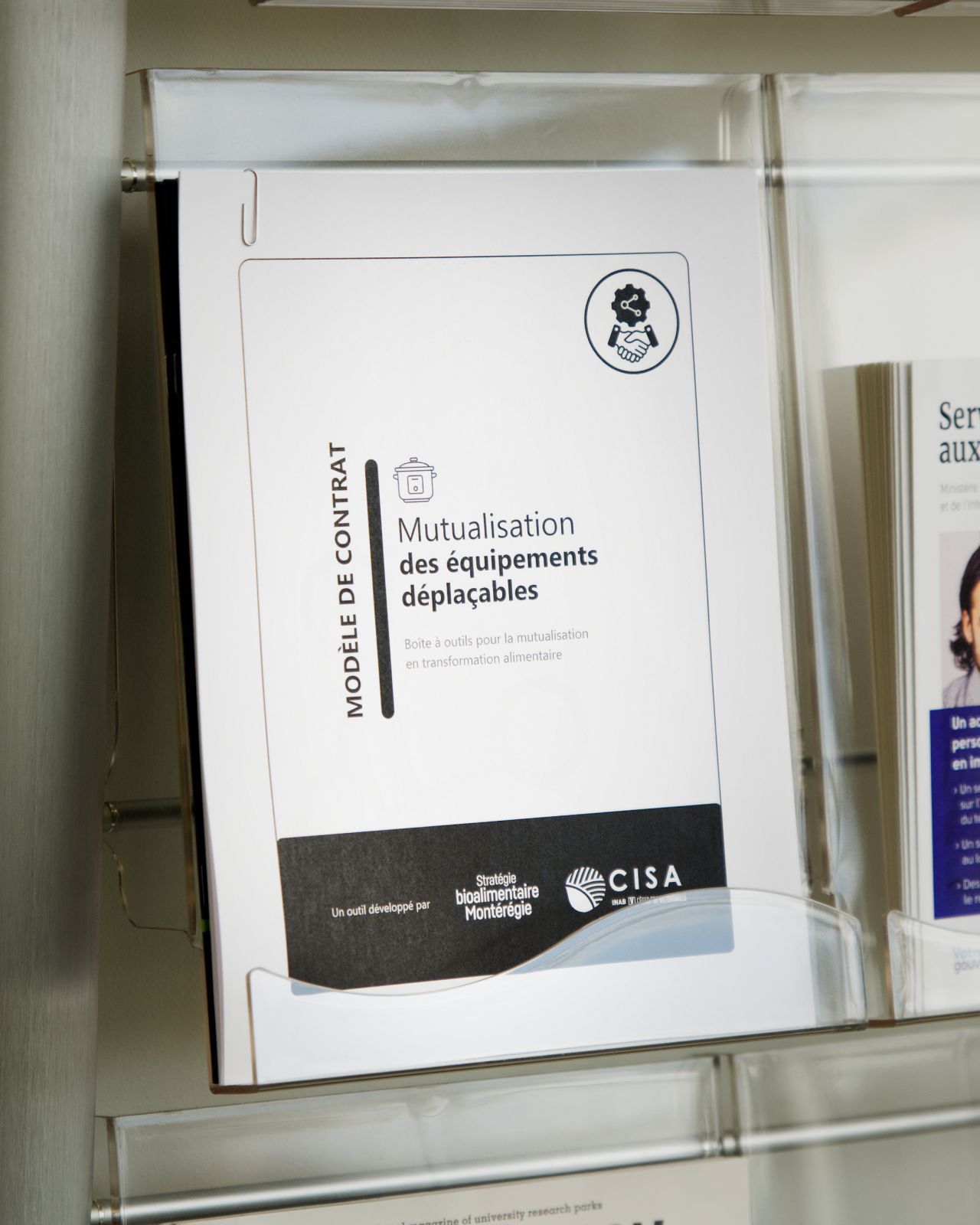


While sharing assets between projects with similar goals can be advantageous, it is essential to ensure that all parties involved benefit and are well-protected. To this end, the Stratégie bioalimentaire Montérégie (SBM), in collaboration with the Centre d’innovation sociale en agriculture (CISA), has set out to simplify the legal framework surrounding the sharing of food processing equipment and infrastructure. A toolkit, available for free on the SBM website, was co-created with over fifty professionals and partner organizations.
"These tools provide a legal framework for the parties involved in resource sharing. They also offer an interesting alternative to the models of agricultural machinery-sharing cooperatives (CUMA), since the contracts are agreements between an owner and a user without requiring the creation of a formal cooperative," says Catherine Cyr, Bio-food Development Advisor at the Stratégie bioalimentaire Montérégie.
The toolkit includes: contract templates, a procedure for calculating sharing fees, and a frequently asked questions (FAQ) section addressing the most common concerns.
"The tools were specifically designed to meet the unique needs of the food processing sector. We have included several clauses, such as allergen declarations, to help anticipate risks and protect all parties," adds Catherine Cyr.
Catherine Cyr concludes with a piece of advice: to limit the risks associated with resource sharing, the most important thing is to establish a climate of trust and transparency between all parties from the very beginning.