

Be careful! When a batch of grain leaves the dryer, its moisture content is not uniform. Grain size varies, initial moisture content varies, and a dryer does not dry every batch identically. This heterogeneity can become a direct source of storage problems. This is why we recommend that you:
calibrate your moisture meter properly
take several samples at the dryer outlet to measure moisture variability, and
aerate for an extended period after drying to even out the moisture content within the bin.
Why Focus on a Proactive approach?
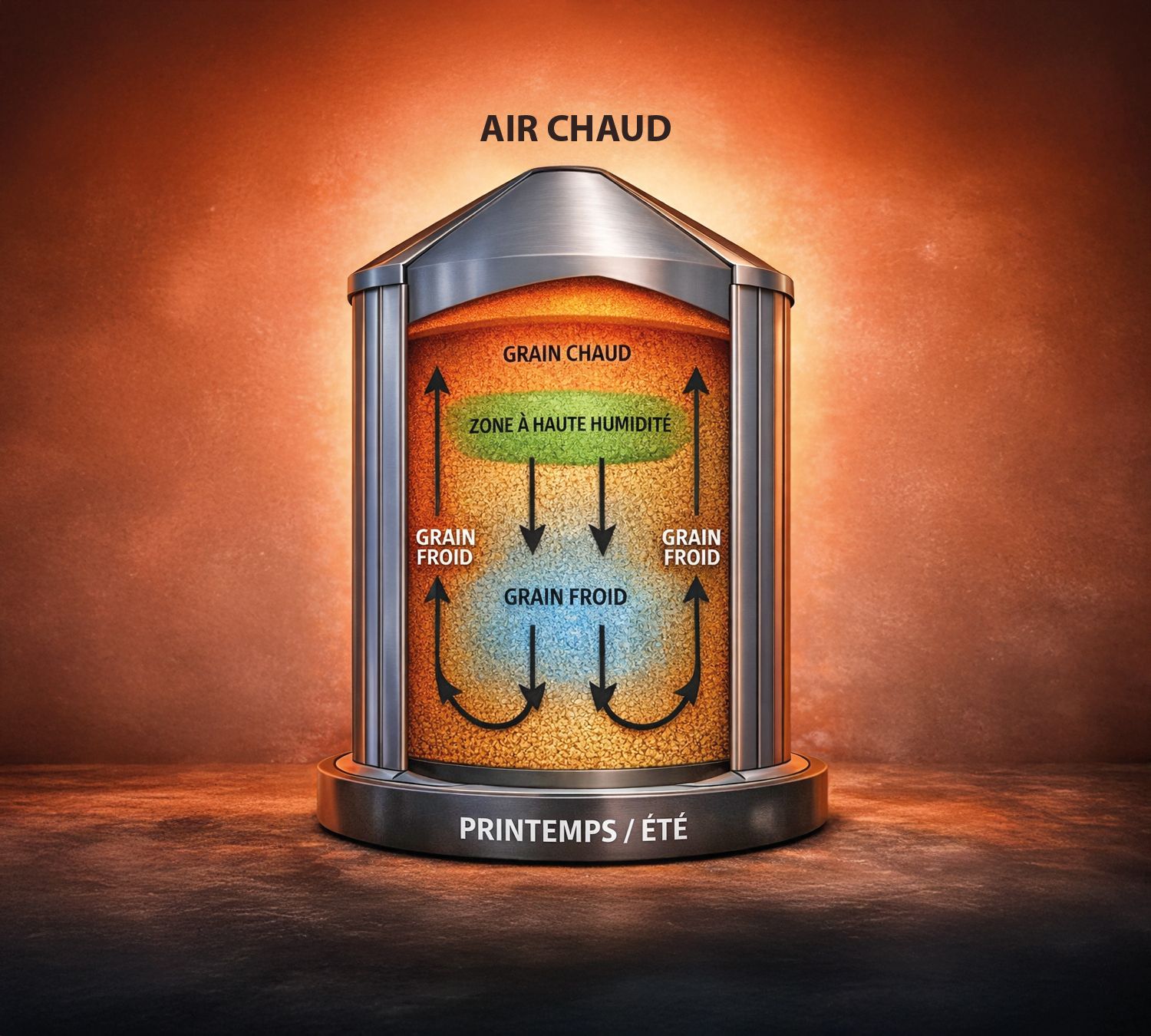
In a grain bin, temperature and humidity sensors monitor only a small perimeter around where the sensor is located. This means that a hot spot, a damp pocket, or an area of mold can develop between two sensors without being immediately detected. This distinction is critical: the healthy appearance of the top layer can mask significant problems deep within the grain mass.
Being proactive means refusing to wait until the grain shows signs of deterioration. It also means addressing the conditions that promote spoilage before they become widespread.
This is where proactive aeration really comes into its own. It’s not just about “lowering the temperature.” It’s about uniformizing the grain mass, reducing internal temperature gradients, supporting seasonal transitions, and minimizing conditions that promote mold, overheating, germination, or condensation. We don’t aerate only when there’s a problem; we aerate to prevent a problem from happening.
To learn more, visit our blog.