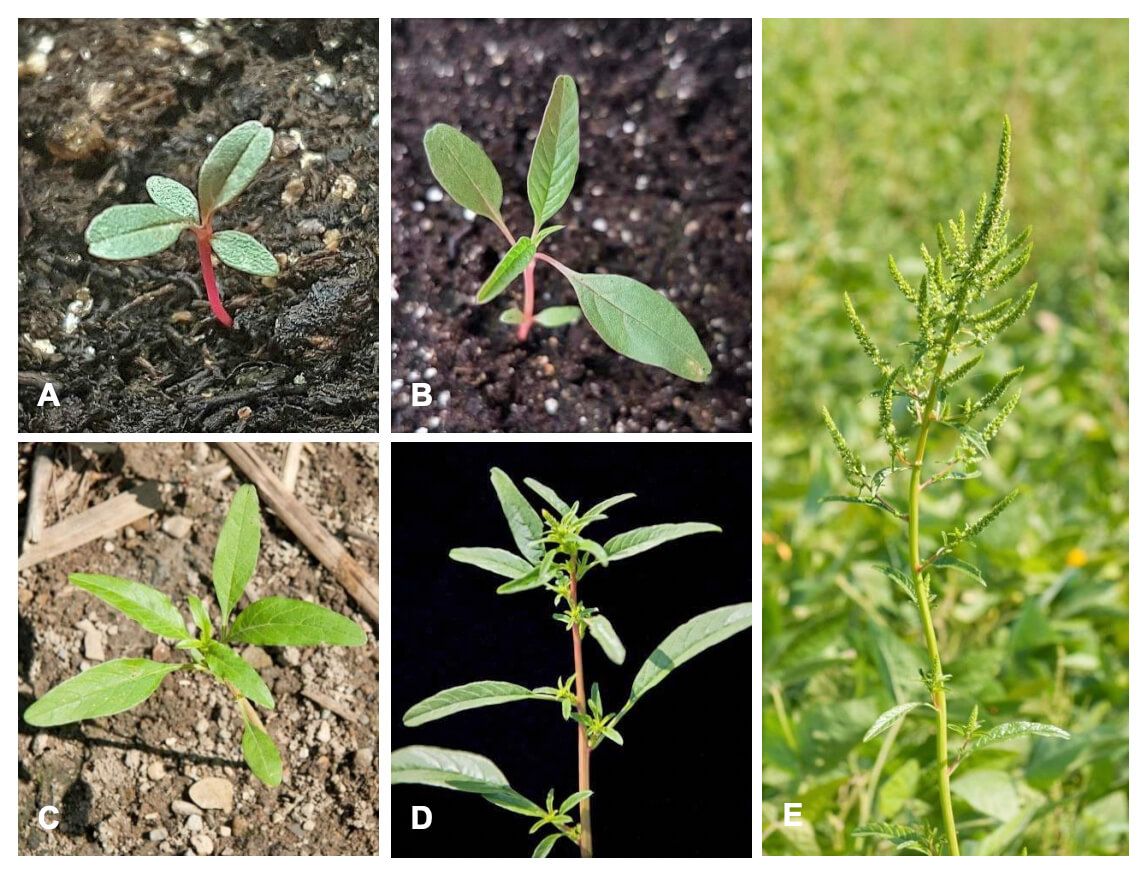

Waterhemp populations can evolve rapidly and develop resistance to multiple herbicide groups, with resistance profiles varying by region. As a result, even a small infestation can become a long-term problem, making early detection and management essential.
What to Do If You Suspect Waterhemp
Regular scouting remains your first line of defence. Walk your fields systematically to ensure complete coverage, paying extra attention to field entrances, borders, ditches, waterways, and areas with heavy machinery traffic.
Early detection at the seedling stage is ideal, as it allows for more effective control right from the start of the season. If you are scouting in August or September, scan the top of the crop canopy for emerging flower heads. At this stage, waterhemp is usually easier to tell apart from other amaranth species thanks to its less dense seedheads and narrower leaves.
As plants become larger, the effectiveness of many herbicides declines. An integrated weed management strategy tailored to your cropping system and available control options is essential to limit its spread. Don't try to manage the problem on your own. Contact your agronomist or your regional MAPAQ advisor promptly to confirm the species, assess the risk, and build a strategy tailored to the specific resistance profile in your field.
In 2026, the Laboratoire d’expertise et de diagnostic en phytoprotection is offering free amaranth species identification and herbicide resistance testing.
Best to stay vigilant!