


WBC Eradication Research Project
An Unexpected Discovery Could Help Corn Growers
While working on a research project with an entirely different objective, a team of researchers at the Centre de recherche sur les grains made a rather unexpected discovery.
A Breakthrough Revealing an Entirely Different Species
Back in 2017, researchers were collecting western bean cutworm (WBC) eggs from fields across Quebec to study the notorious corn pest. While monitoring the eggs' hatching in the lab, the team noticed something strange: instead of turning pink and then purple, some egg masses turned gray, then black. While monitoring the eggs' hatching in the lab, the team noticed something strange: instead of turning pink and then purple, some egg masses turned gray, then black.
than WBC larvae, as expected, microscopic parasitic wasps emerged from these eggs. The discovery suggested that a natural enemy of WBC was already present in Quebec fields and capable of parasitizing its eggs.
Discovering a Natural Predator of the Western Bean Cutworm
Rather than WBC larvae, as expected, microscopic parasitic wasps emerged from these eggs. The discovery suggested that a natural enemy of WBC was already present in Quebec fields and capable of parasitizing its eggs.
"We had just uncovered evidence of natural parasitism already occurring on western bean cutworm eggs in Quebec," says Julien Saguez, a biosurveillance and entomology researcher at the Centre de recherche sur les grains.Centre de recherche sur les grains.
The microscopic wasps were later identified as Trichogramma minutum. These insects parasitize the eggs of several harmful moth species and are already widely used as biological pest control agents in agriculture.
“Interestingly, the species of Trichogramma typically used in corn—Trichogramma ostriniae and Trichogramma brassicae—were not the ones we found in the WBC egg masses. Instead, we found the native species Trichogramma minutum,” Saguez points out.Trichogramma minutum,” Saguez points out.
That observation sparked a three-year research project dedicated to unlocking the potential of this natural ally.
Promising Potential
Julien Saguez’s most recent research project evaluated the effectiveness of using drones to release T. minutum over corn crops via two different application methods. The results showed that whether deployed in biodegradable capsules or sprayed in bulk, drone releases reduced crop damage by 20% to 70% compared to untreated test plots.
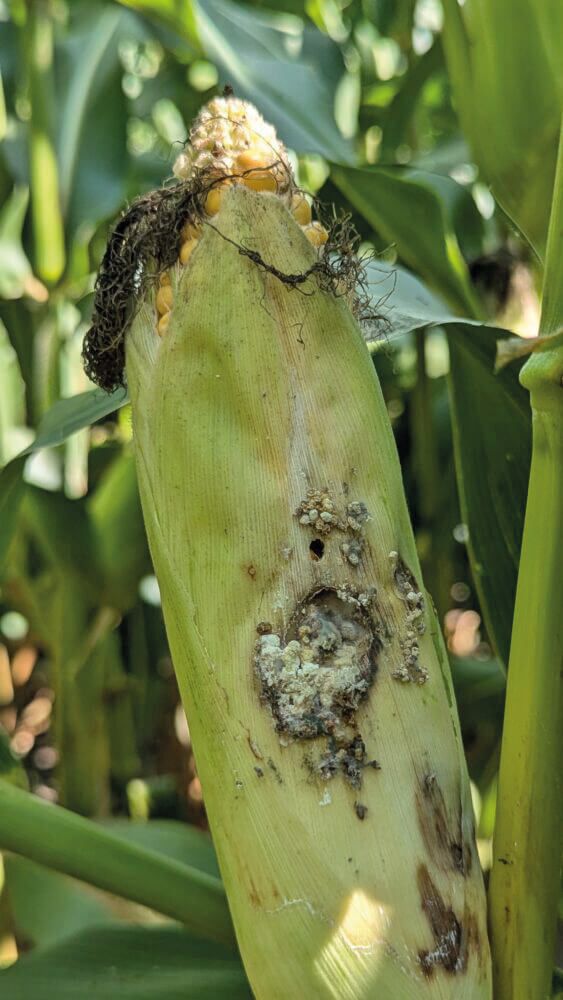
Since its arrival in Quebec in 2009, the western bean cutworm has steadily expanded its reach, with populations now present across every corn-growing region in the province. These findings suggest that mass releases of Trichogramma wasps to bolster a natural enemy already present in Quebec fields could be a promising approach to helping corn growers manage this pest.

Recent agronomist columns
An Unexpected Discovery Could Help Corn Growers

Quebec Farms Are Embracing Automated Lockers

How to Talk to Someone Experiencing Farm Stress
3 ways not to miss any bargains
The appAgriExtra
Manage your agricultural ads on the go, anytime.
The AgriExtra app is under development and will be available soon.