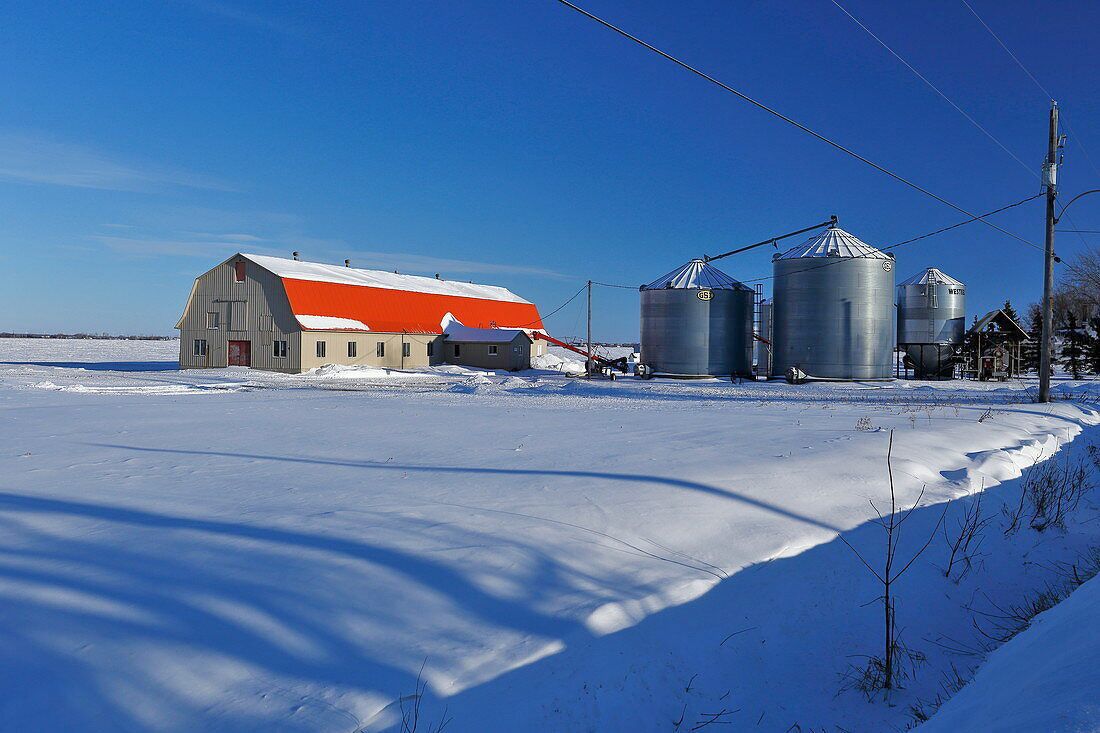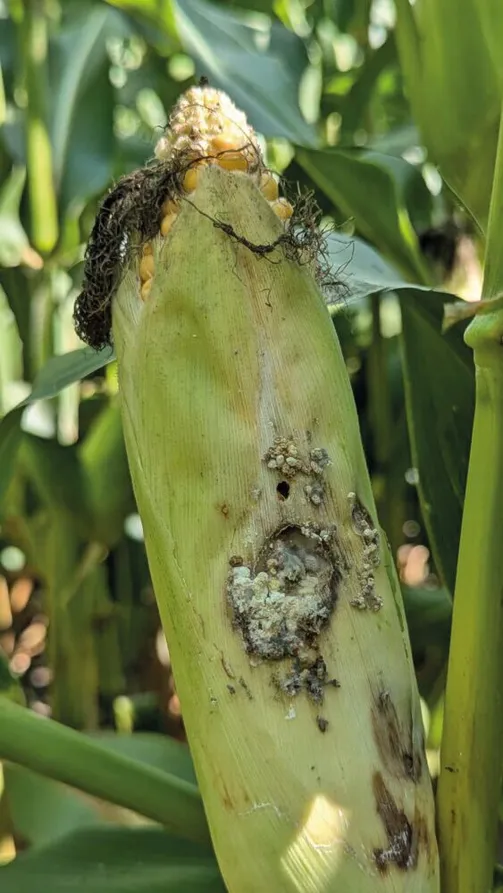


The problem with grain bins is that from the outside, they look like nothing more than sheet metal. But on the inside, they are teeming with life. When spring arrives, it's time to start planting. The countdown begins as we wait for the soil to warm up to 7, 8, 9, or 10 degrees Celsius. Then it's time to sow! So, consider the grain in your bins. If it is warm and there is moisture present, what happens? The grain germinates. A word of advice: keep an eye on your grain to keep it safe.
What are the main storage issues to watch out for this winter to keep your grain safe?
Risk #1: Heated grain
Once dried, stored grain is always at risk! If temperatures are particularly warm at harvest time, say 20°C, the grain coming out of the dryer will be slightly warmer, between 25°C and 28°C. At these temperatures, your grain may continue to perspire and thermal runaway could occur.
Risk #2: Roof condensation
If the grain mass is warm and it is cold outside: air enters the bin through the fans, is heated by the grain, and the moisture in the air ends up condensing on the roof. As a result, water drips onto your grain. The grain in turn absorbs moisture, swells, forms a crust, and eventually molds.
Risk #3: Water or snow infiltration
Snowstorms, blowing snow, heavy rain with crosswinds—all reasons why water could enter your bins. So, to avoid the worst, it doesn't cost much to take a look and see what's going on.
DID YOU KNOW?
In 2020 and 2024, corn harvesting conditions were exceptional. Warm temperatures, dry corn—in short, a season that went off without a hitch. Yet, both years, we received a record number of calls about storage problems. Why? It's simple. The grain bins were cooled too late, and as a result, condensation on the roof created grain bridges, clumps, mold, etc.
As one producer told me this year after the harvest: “I've never been in better shape in my life! My Apple Watch tells me I climb an average of 40 floors a day.” It just goes to show that hard work can pay off twice over.