
A Thoughtful Animal Feed for Delicious Charcuterie
What sets Les Viandes Bio de Charlevoix apart is not just its organic certification, but its thoughtful reflection on animal nutrition. It was after a learning trip to Europe that Damien Girard, the company’s founder, learned the art of charcuterie-making.
Drawing inspiration from pre-industrial farming practices, the animals are fed a blend of grains consisting of oats, wheat, barley, rye, and peas. These fibre-rich grains slow digestion and animal growth by creating a longer-lasting feeling of fullness. Corn is completely removed from the feed of older animals.
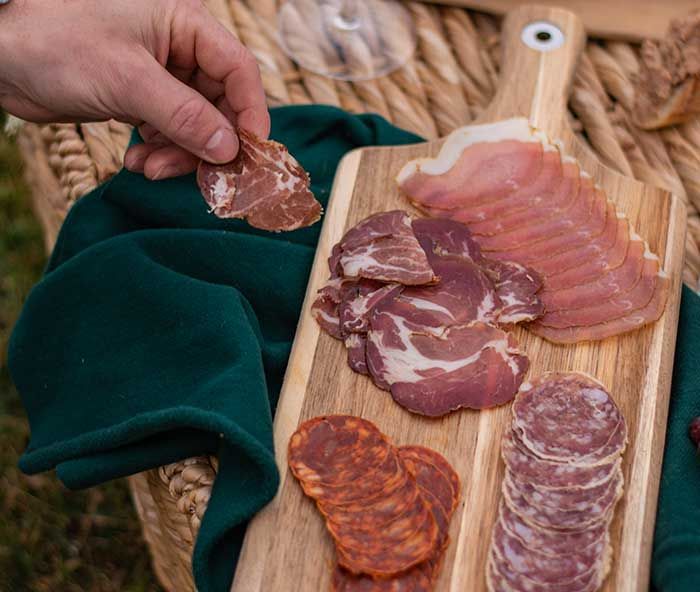
This feeding approach improves the texture and quality of the animals’ fat, making it firmer and whiter, an essential quality for charcuterie. Fat derived from rye, in particular, stands out for its firmness, whiteness, and savoury taste.
A Valued and Sought-After Quality
Over the years, experience has shown Damien Girard, Natasha McNicoll, and their children, Elsa, Félix, and Alexandra, all involved in the business, that meat quality is strongly influenced by animal welfare, stress levels, and above all, diet. Their approach, which encourages slower animal growth, results in older animals at slaughter and meat with a noticeably superior texture:
“Our products cost about 30 to 40% more than others on the shelves, and yet consumers are willing to pay because they can perceive the difference in what they’re buying,” explains Damien Girard.
By betting on natural growth, some farms are bringing meaning back to animal husbandry and putting nutritional quality at the center of their choices; a coherent approach for those who prioritize added value over yield at any cost.