
When technology gives a false sense of security
Manufacturers of connected storage systems often talk about “smart storage,” “24/7 monitoring,” and even “systems that do the work for you.” These terms, create an illusion: that a farm equipped with such a system is immune to all problems, but a sensor alone won’t fix anything.
A monitoring system only measures, activates, and alerts. It can inform you that there is a problem, but it does not solve the cause: an uncalibrated moisture meter, calibration error in the dryer sensors, too much moisture, poor aeration distribution, compacted grain, too many soybean pods, etc. Technology helps measure and automate certain tasks, but it is humans who are responsible for inspecting and programming the system. |
The risk of lax storage practices
Many producers recognize that after installing an automated system, vigilance tends to decline. People trust the machine. This is not surprising, since it is much more efficient at certain tasks, such as turning on aeration at the right time.
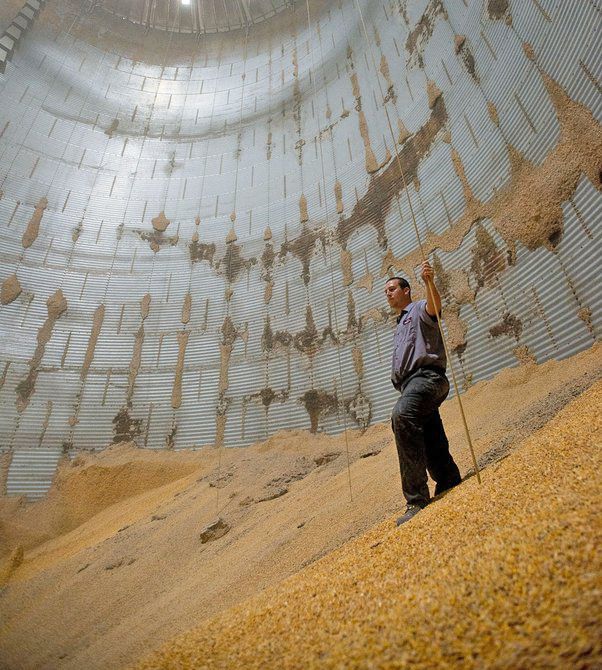
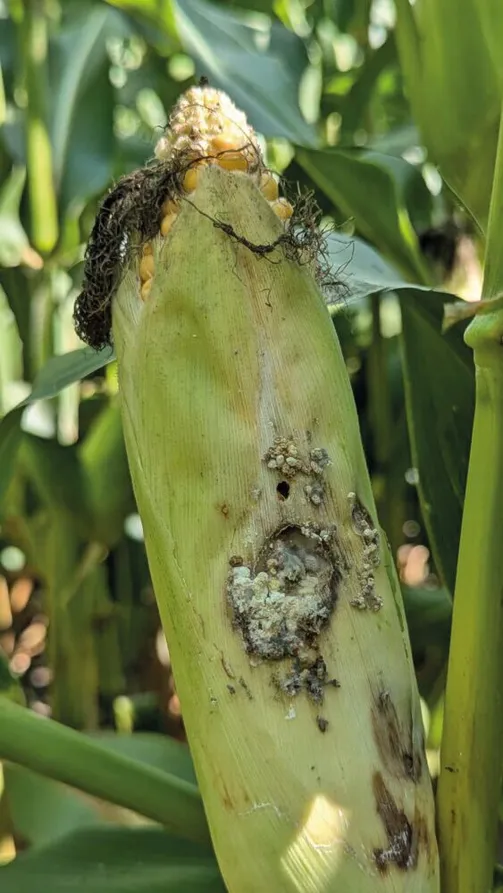
However, problems such as storage issues, mold, heating, germination, and insects do not appear all at once. They develop gradually, often in areas that are not directly measured by sensors.
A traditional cable monitoring system may therefore not signal anything while, a few feet away, a damp pocket begins to heat up slowly. Remember, grain is an excellent thermal insulator!
Human expertise and vigilance are the keys to success
Grain storage is not an exact science; it is an art supported by science. Technology transforms this art, but does not replace it.
Digital monitoring is useless if the grain is poorly dried (too moist with lots of impurities), if aeration is inadequate, or if no physical monitoring is done.
The producers who succeed year after year are not those with the most sensors, but those with the most rigor. Of course, this takes time and energy. And it is this rigor, supported by technology, that makes all the difference between risky storage and controlled storage.