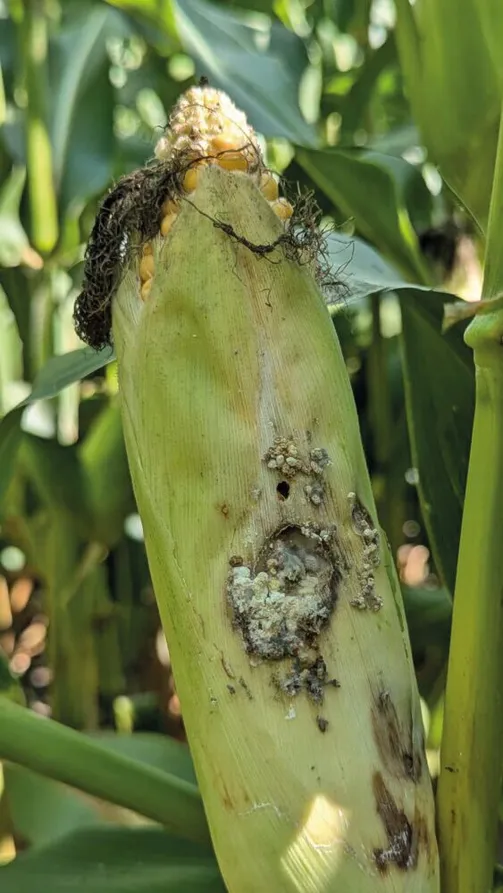


Unfortunately, far too many myths still persist about drying, such as waiting for the grain to dry in the field to reduce drying costs or drying at high temperatures to speed up the process. In both cases, you’re bound to lose out.
Productivity Gains to Focus On
By drying your own grain, you can improve its grade. For corn, moving from a #3 grade to a #2 grade will earn you at least $5/t.
Harvesting earlier pays off in two ways. First, the weather will be warmer, and your propane costs will drop by 12% to 15%. Second, you’ll avoid harvesting in difficult conditions: heavy rain, muddy ground, persistent snow, etc.
Mastering the drying process, using a reliable and calibrated moisture meter, and monitoring the grain flow with properly calibrated (and, above all, properly installed) moisture sensors allow you to stay in control and reduce over-drying. All of this, combined with adequate and well-controlled aeration, helps ensure uniform grain moisture content. Every percentage point of moisture removed unnecessarily represents a loss of weight at the moment of sale. In fact, 1% moisture content is equivalent to 1% of the grain’s weight. In other words, drying further can reduce revenue without any real benefit.
Aeration: The Often-Underestimated Ally
A good aeration system does more than just cool the grain. It helps maintain consistent moisture levels, minimize storage risks, and preserve the quality of your grain. But you still need to choose the right fans! Because every fan on the market has a specific purpose. Has anyone ever explained to you what the four available types are used for? Really?
Relying on Data
The goal is to rely on information to make the right decisions and take action at the right time. The best drying strategy isn’t necessarily to replace your dryer. But understanding, measuring accurately, and making the best decisions allow you to maximize your revenue while controlling energy costs.
In a context where every dollar counts, drying deserves special attention now more than ever.
To learn more, visit our blog.